Diagnose AI
An AI-powered healthcare diagnostic platform combining Computer Vision, Machine Learning, NLP, and LLMs to assist doctors in detecting rare diseases, skin cancer, brain tumors, and Parkinson's disease using medical reports, patient symptoms, and scans.
Visit website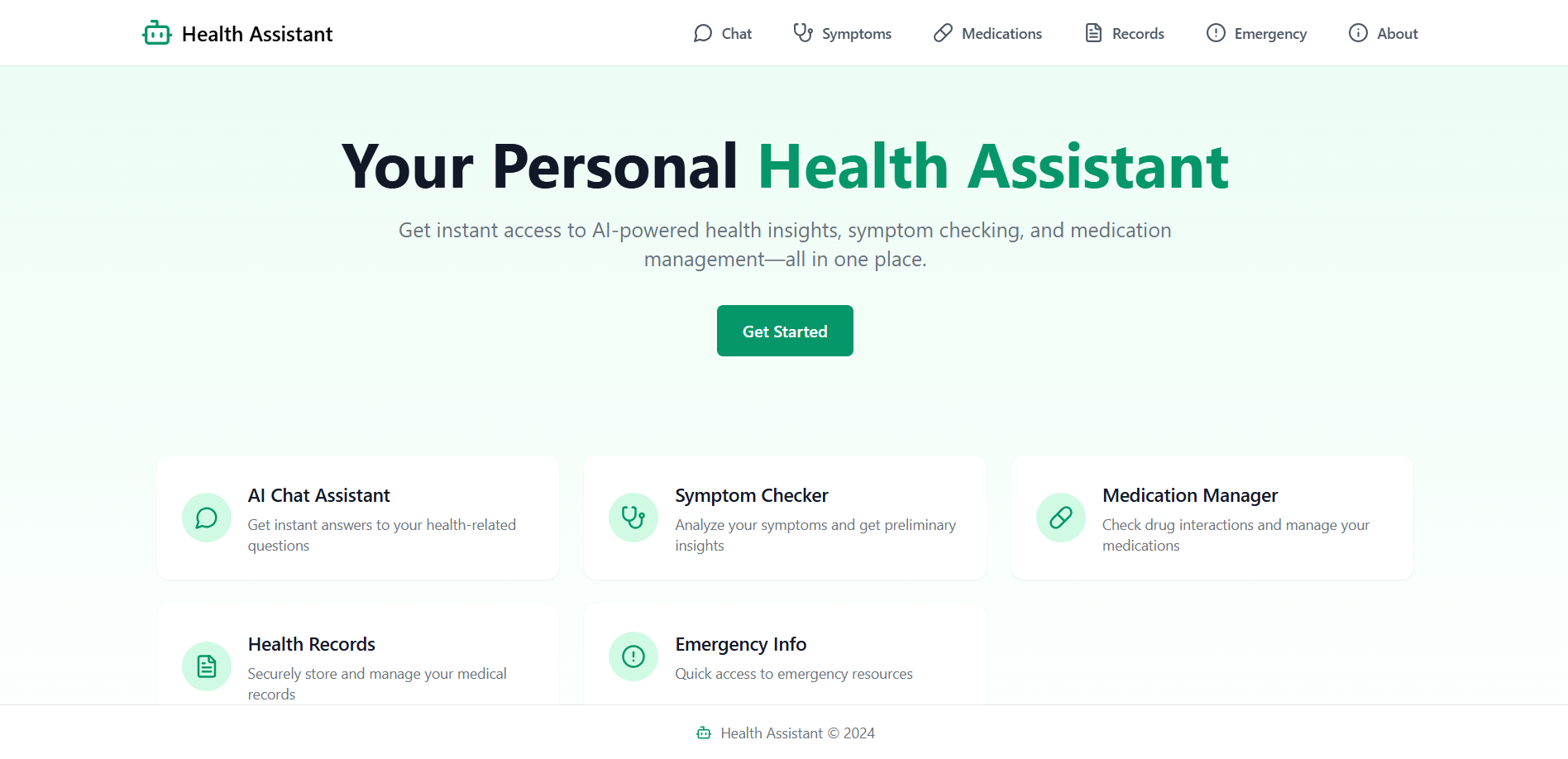
The Problem
Rare diseases are extremely difficult to diagnose because symptoms often overlap with common diseases. Doctors need to analyze enormous amounts of patient data manually, making early detection challenging and time-consuming. Traditional diagnostic approaches struggle with:
• Rare diseases like skin cancer, brain tumors, Parkinson's disease, and genetic disorders requiring extensive analysis
• Manual processing of medical reports, lab results, and patient history
• High risk of diagnostic errors due to human fatigue and data overload
• Limited access to specialized expertise in rural healthcare settings
The Solution
Diagnose AI is an intelligent healthcare ecosystem that combines Computer Vision, Machine Learning, Natural Language Processing, and Large Language Models to assist doctors in making faster, more accurate diagnostic decisions. The platform analyzes patient history, symptoms, medical reports, and clinical scans using specialized AI models tailored for different disease detection scenarios.
Key Modules
RareDx – Rare Disease Diagnostic Assistant: Uses NLP and Gemini AI to analyze medical reports, extract medical entities, and match symptoms against rare disease profiles. Provides disease probability scores, similar disease matching, and AI-generated treatment recommendations.
Skin Cancer Detection: Employs YOLOv8 for real-time detection and classification of skin lesions. Provides cancer type classification, confidence scores, and early detection assistance for dermatologists.
Brain Tumor Detection: Combines YOLO and CNN to analyze MRI scans. Detects tumor regions, provides precise localization, and assists radiologists in treatment planning.
Parkinson's Disease Detection: Uses XGBoost classifier trained on clinical measurements and patient symptoms to predict disease probability with high accuracy.
Medical Report Analysis: Automatically extracts and summarizes insights from medical PDFs using PyPDF2, NLP, and Gemini AI for rapid clinician understanding.
Technical Architecture
Frontend: React with Tailwind CSS for responsive, modern dashboard interfaces
Backend: Node.js + Express.js for API routing, FastAPI + Flask for AI model serving, MongoDB for data persistence
AI/ML Stack: YOLOv8 and CNN for computer vision, XGBoost for disease prediction, TF-IDF and Scikit-learn for NLP, Gemini AI for medical reasoning
Supporting Tools: PyPDF2 for PDF processing, spaCy for NLP entity recognition
Workflow Overview
The system operates through four parallel AI pipelines:
RareDx Pipeline: Upload EHR → Text Extraction → Vectorization → Similarity Search → LLM Analysis → Final Output
Skin Cancer Pipeline: Upload Skin Image → YOLO Processing → Cancer Detection → Probability Prediction
Brain Tumor Pipeline: Upload MRI → YOLO + CNN → Tumor Detection → Output Results
Parkinson's Pipeline: Enter Symptoms → XGBoost Classifier → Disease Prediction
Impact & Benefits
• Supports Doctors: Provides AI-assisted recommendations, reducing diagnostic time and cognitive load
• Speeds Up Diagnosis: Automated analysis enables rapid disease detection and early intervention
• Improves Healthcare Access: Brings specialized diagnostic capabilities to rural and underserved regions
• Reduces Errors: AI-powered consistency minimizes human diagnostic errors and improves accuracy
• Scalable Solution: Multi-disease platform architecture enables easy addition of new diagnostic modules
Future Enhancements
• Multi-Disease Expansion: Add Alzheimer's, lung cancer, and diabetic retinopathy detection
• Indian Medical Database Integration: Create region-specific datasets for improved disease matching
• AI Virtual Assistant: Real-time medical insights and automated clinical recommendations
• Genetic Disease Prediction: Genomic analysis for hereditary disease detection